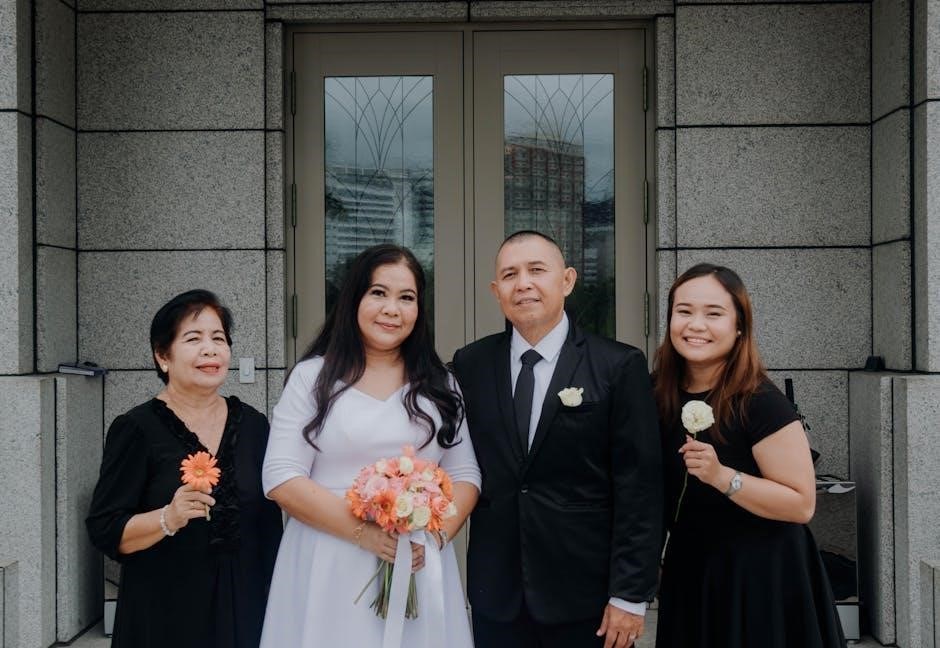
Affidavits demonstrate a real marital relationship to USCIS, often crucial for Form I-751; Examples, often found as PDFs, showcase shared lives and genuine connections.
These statements support claims of a legitimate union, going beyond simple legal documentation. They are vital for proving a relationship’s authenticity.
“Bona fide” means a good faith marriage, not solely for immigration purposes; affidavits help establish this genuine intent, as shown in examples.
Purpose of the Affidavit
Affidavits serve as sworn statements confirming the authenticity of a marriage, bolstering the I-751 petition. They aren’t typically required unless the marriage appears questionable to USCIS, but proactively including them strengthens the case. Example PDFs demonstrate how friends and family attest to the couple’s genuine relationship, detailing observed interactions and shared experiences.
The primary goal is to provide corroborating evidence, supplementing official documents like joint tax returns and leases. These personal accounts offer a nuanced perspective, showcasing the couple’s daily life and emotional connection. A well-crafted affidavit, mirroring examples, can significantly influence the outcome, especially when facing scrutiny or lacking extensive financial documentation. They demonstrate a real, ongoing marital union.

Relevance to Form I-751
Form I-751, Petition to Remove Conditions on Residence, requires proof of a bona fide marriage. Affidavits are particularly relevant when the initial marriage-based green card was granted conditionally. Example PDFs illustrate how these statements directly address USCIS’s concerns about fraudulent marriages. They provide third-party validation of the relationship’s legitimacy, supplementing financial and cohabitation evidence.
If the couple lacks extensive joint financial history, affidavits become even more crucial. They demonstrate a shared life beyond paperwork. Properly formatted affidavits, mirroring examples, can overcome potential red flags, such as age gaps or cultural differences, assuring USCIS of the marriage’s genuineness and intent.
Understanding “Bona Fide Marriage”
USCIS defines a “bona fide marriage” as one entered into in good faith, with the genuine intention of establishing a life together as husband and wife. It’s not simply a marriage for immigration benefits. Affidavit examples, often available as PDFs, demonstrate this concept through detailed accounts of shared experiences and mutual support.
Evidence showcasing a shared life – joint accounts, leases, and family interactions – supports this claim. Affidavits from those who know the couple can attest to the authenticity of their relationship, providing crucial context. These examples highlight that a genuine marriage is built on more than just legal documentation.

II. Core Evidence for Form I-751 (Beyond Affidavits)
Form I-751 requires proof beyond affidavits: joint tax returns, bank statements, leases, and photos. PDF examples show comprehensive documentation of a shared life.

Joint Tax Returns
Jointly filed tax returns are powerful evidence demonstrating a shared financial life, a cornerstone of a bona fide marriage. USCIS scrutinizes these returns to confirm a couple presents themselves as married to the IRS, validating their union beyond immigration purposes.
Submitting several years of joint tax returns strengthens the case, showcasing a consistent pattern of financial integration. PDF examples often include complete returns, or at least the first two pages showing names, addresses, and filing status.
Ensure the returns are authentic and accurately reflect the couple’s financial situation. Discrepancies can raise red flags, potentially leading to further scrutiny or denial of the I-751 petition.
Joint Bank and Credit Accounts
Joint bank and credit accounts are compelling evidence of a shared financial life, vital for proving a bona fide marriage to USCIS. These accounts demonstrate a mutual commitment to managing finances as a couple, going beyond a purely legal union.
Statements showing shared addresses and consistent activity are crucial. PDF examples often include account statements spanning several months or years. These illustrate a pattern of joint financial responsibility.
Evidence of shared credit cards, loans, or mortgages further strengthens the case. Ensure documentation clearly displays both names and the account’s history, bolstering the authenticity of the relationship.
Lease or Mortgage Documentation
Lease or mortgage documentation serves as powerful evidence of a shared life, demonstrating a joint commitment to a common residence. USCIS views cohabitation as a key indicator of a bona fide marriage, and these documents directly support that claim.
PDF examples frequently include complete lease agreements or mortgage statements listing both spouses’ names. Documentation should clearly show the shared address and the duration of occupancy.
Utility bills, property tax records, and homeowner’s insurance policies further corroborate the shared residency. Providing a comprehensive set of documents strengthens the application and demonstrates a genuine, established household.
III. Detailed Look at Affidavits of Support
Affidavits from family and friends bolster your case; PDF examples show who should write them and how many are needed to avoid repetition.
Who Should Provide Affidavits?
Affidavits are most impactful when submitted by individuals who genuinely know the couple and can attest to the authenticity of their relationship. These individuals should be friends, family members, or even coworkers who have observed the couple interacting over a significant period.
PDF examples of successful affidavits often feature statements from those who have witnessed shared experiences, such as holidays, social gatherings, or everyday life. Avoid relying solely on close relatives, as USCIS may view those testimonies with more scrutiny. A diverse range of affiants strengthens the overall credibility of the submission.
The key is to select individuals who can provide specific, detailed accounts of the couple’s genuine connection, demonstrating a life built together beyond the scope of immigration requirements.
Number of Affidavits Needed
Determining the appropriate number of affidavits for Form I-751 is a common question. While USCIS doesn’t specify a precise number, submitting three to five strong affidavits is generally recommended. PDF examples demonstrate that quality outweighs quantity; well-written, detailed affidavits are more valuable than numerous generic ones.
The ideal number depends on the couple’s circumstances. If the marriage appears straightforward, fewer affidavits might suffice. However, if there are potential red flags – like a significant age gap or differing cultural backgrounds – more affidavits can bolster the case.
Focus on securing statements from individuals who can provide unique and compelling evidence of the relationship’s genuineness.
Avoiding Redundancy in Affidavits
Redundant affidavits weaken your I-751 petition. USCIS reviewers quickly identify repetitive statements, diminishing the overall impact. PDF examples of strong affidavits showcase diverse perspectives and unique observations. Each affiant should contribute new information, avoiding simply echoing what others have stated.
Coordinate with your witnesses beforehand. Discuss what aspects of your relationship they’ve personally observed to ensure varied content. Encourage them to focus on specific interactions and shared experiences.
A collection of distinct, detailed accounts is far more persuasive than multiple affidavits saying essentially the same thing.
IV. Content of a Strong Affidavit
Affidavits need details! The affiant’s relationship to the couple, specific interactions observed, and concrete examples of shared life are crucial, as PDF examples show.
Affiant’s Relationship to the Couple
Affiants should clearly state their connection to the couple – are they family, friends, or coworkers? A detailed explanation establishes credibility. PDF examples often demonstrate how to articulate this relationship effectively.
Specify the length of time known to the couple and the nature of the interactions. Were they casual acquaintances or close confidantes? The more specific, the better.
Highlight how the affiant came to know the couple, providing context for their observations. This builds a stronger narrative. Affidavit examples frequently emphasize the importance of a well-defined relationship to bolster the claim of a bona fide marriage.
Details of Interactions with the Couple
Affidavits must detail specific interactions, moving beyond general statements. Describe visits, phone calls, or shared activities. PDF examples showcase how to narrate these encounters effectively.
Mention specific events witnessed – holidays, birthdays, or everyday moments. These details paint a picture of a shared life. Focus on observations that demonstrate a loving, committed relationship.
Include details about how the couple interacted with each other, highlighting affection and mutual respect. Affidavit examples emphasize the importance of concrete observations. Avoid assumptions; stick to what was personally witnessed.
Specific Examples of Shared Life
Affidavits gain strength through concrete examples of a shared life. PDF examples often illustrate this with details like joint vacations, holiday traditions, or shared hobbies. Describe how the couple supports each other emotionally and practically.
Mention instances where you observed them making joint decisions – about finances, housing, or future plans. These demonstrate a unified partnership. Detail how they navigate challenges as a team, showcasing commitment.
Include anecdotes about everyday routines – grocery shopping, cooking, or simply spending time together. These seemingly small details build a compelling narrative of a genuine relationship, as seen in affidavit examples.
V. Affidavit Formatting and Requirements
Affidavits require proper letter format, including contact details, a clear statement, and the affiant’s signature and date. PDF examples demonstrate this.
Follow these guidelines for a professional presentation, increasing acceptance by USCIS.
Proper Letter Format
Affidavits must adhere to a standard business letter format for clarity and professionalism. Begin with the affiant’s full name and contact information – address, phone number, and email – at the top left corner. Date the letter appropriately below this. Address the letter to “USCIS Officer” followed by the relevant service center address.
The body of the affidavit should be concise and well-organized, using paragraphs to separate distinct points. Utilize a clear and readable font, such as Times New Roman, size 12. PDF examples readily available online demonstrate this structure. Ensure sufficient margins for readability. Finally, leave space for the affiant’s original signature and typed name below the concluding paragraph.
Affiant’s Contact Information
Accurate and complete contact information for each affiant is crucial for USCIS verification. This includes their full legal name, current residential address, a reliable phone number, and a valid email address. Providing this data allows USCIS to reach out for clarification if needed, bolstering the affidavit’s credibility.
PDF examples of affidavits consistently showcase this information prominently at the letter’s heading. Ensure the address is current and matches official records. A professional email address is preferred. This detail demonstrates the affiant’s willingness to stand by their statements. Proper contact details are a fundamental element of a strong affidavit.
Signature and Date

A handwritten signature is absolutely essential; digital or copied signatures are unacceptable to USCIS. The affiant must physically sign the affidavit, affirming the truthfulness of the statements made within. PDF examples invariably display a signature line directly above the affiant’s typed name.
The date of signing is equally important, establishing when the affidavit was sworn. This demonstrates the recency of the affiant’s knowledge and observations. Ensure the date format is clear (MM/DD/YYYY). A properly signed and dated affidavit signifies the affiant’s commitment to the veracity of their testimony.
VI. Common Mistakes to Avoid in Affidavits
Avoid vague claims; specificity is key. PDF examples show detailed accounts. Contradictions or missing details weaken credibility, potentially delaying your I-751 approval process.
Vague or General Statements
Affidavits riddled with generalized statements like “We are very happy together” lack the persuasive power USCIS seeks. PDF examples of strong affidavits demonstrate the importance of concrete details. Instead of broad assertions, focus on specific instances illustrating the shared life and genuine connection.
Statements such as “We spend time together” are insufficient; describe how you spend time – shared hobbies, routines, or vacations. Avoid clichés and instead provide unique anecdotes. A detailed narrative, mirroring the depth found in successful affidavit examples, significantly strengthens your case. Remember, specificity builds credibility and demonstrates a bona fide marriage.
Contradictory Information
Affidavits containing conflicting details immediately raise red flags with USCIS. Review PDF examples of successful affidavits to understand the need for consistency. Discrepancies between affidavits, or between affidavits and other submitted evidence, can severely damage your case.
Ensure all affiants recall dates, events, and details similarly. Thoroughly compare statements before submission. Contradictions suggest fabrication or a lack of genuine shared experiences; Accuracy is paramount; even minor inconsistencies can cast doubt on the legitimacy of the marriage. Meticulous review, guided by strong affidavit examples, is crucial for a cohesive and credible presentation.
Lack of Specific Details
Affidavits filled with vague statements like “we spent a lot of time together” are ineffective. USCIS requires concrete examples demonstrating a shared life. Analyze PDF examples to observe how successful affidavits detail specific events, routines, and interactions.
Instead of generalizations, describe specific holidays, vacations, or daily activities. Mention shared responsibilities, mutual friends, and how the couple supports each other. A lack of detail suggests a superficial relationship. Strong affidavits paint a vivid picture of a genuine marital bond, using precise and memorable instances. Referencing examples ensures impactful storytelling.
VII. Supporting Documents to Include with Affidavits
Affidavits gain strength with supporting evidence like ID copies, photos, and communication records. PDF examples illustrate how these bolster credibility and demonstrate a real relationship.
Copies of Affiant’s Identification
Affiant identification is a crucial component when submitting supporting documentation with the affidavit. A clear, legible photocopy of the affiant’s government-issued photo ID is essential. Acceptable forms include a driver’s license, passport, or state-issued identification card.
PDF examples of completed affidavits frequently demonstrate this inclusion. USCIS requires this to verify the affiant’s identity and ensure the statement’s authenticity. The copy should be easily readable and show the full name, photograph, and expiration date. Providing this documentation strengthens the overall credibility of the affidavit and supports the claim of a bona fide marriage.
Photos with the Couple
Photographs serve as powerful visual evidence of a shared life and genuine relationship. Including photos of the affiant with the couple demonstrates familiarity and a pre-existing connection. PDF examples of strong affidavits consistently showcase this type of supporting documentation.
These photos should depict the affiant and the couple engaged in everyday activities – holidays, social events, or simply spending time together. The more natural and candid the photos, the better. They help USCIS visualize the relationship’s authenticity. Ensure photos are clear and include dates or locations if possible, bolstering the overall evidence presented.
Communication Records (e.g., emails, cards)
Communication records, like emails, letters, and cards, offer tangible proof of ongoing interaction and affection. These demonstrate a consistent connection beyond formal documentation. PDF examples of successful affidavits frequently include such evidence, showcasing a sustained relationship.
Select communications that reveal personal details, shared experiences, or expressions of love and support. These records illustrate the emotional depth of the marriage. Redact any sensitive personal information unrelated to the relationship. Presenting a variety of communication types strengthens the overall case, proving a genuine and continuous bond, as seen in affidavit templates.
VIII. Addressing Potential Red Flags
Affidavit examples often tackle age gaps or cultural differences directly. Honest explanations, supported by evidence, mitigate concerns and reinforce the marriage’s legitimacy.
Large Age Gaps
Affidavits addressing significant age differences require careful crafting. Example PDFs demonstrate how to proactively explain the relationship’s natural development and genuine affection. Affiants should detail observations of mutual respect, shared interests, and emotional connection, emphasizing the couple’s compatibility beyond age.
Focus on how the couple met, the progression of their relationship, and the reasons for their attraction. Affiants can attest to the couple’s daily life, demonstrating a normal, loving partnership; Avoid focusing solely on the age gap; instead, highlight the qualities that make the relationship authentic and enduring. Detailed, specific examples are crucial for a convincing affidavit.
Different Cultural Backgrounds
Affidavits addressing cultural differences should showcase the couple’s mutual respect and adaptation. Example PDFs illustrate how to explain the blending of traditions and overcoming potential challenges. Affiants can detail observations of the couple learning each other’s languages, participating in each other’s cultural events, and navigating differing customs.
Highlight how the couple’s diverse backgrounds enrich their relationship, rather than creating conflict. Affiants should emphasize the couple’s commitment to understanding and appreciating each other’s heritage. Specific examples of shared experiences and mutual acceptance are vital for demonstrating a genuine bond.
Limited Shared Financial History
Affidavits can mitigate concerns about limited joint finances, especially early in the marriage. Example PDFs demonstrate how to explain circumstances like separate income sources or recent immigration. Affiants should detail observations of financial support, even if informal, such as one spouse contributing to household expenses or assisting with the other’s debts.
Explain any reasons for delayed joint accounts, like establishing credit or navigating immigration restrictions. Focus on demonstrating a pattern of financial interdependence and mutual support, even without extensive documentation. Affiants can attest to shared financial goals and planning for the future.

IX. Affidavit Example PDF Resources
USCIS offers guidance, while legal form providers and attorneys supply PDF affidavit templates. These examples demonstrate proper formatting and content for Form I-751.
USCIS Website Resources
USCIS (United States Citizenship and Immigration Services) provides essential guidance, though not direct affidavit PDF examples, on Form I-751 requirements. Their website details acceptable evidence of a bona fide marriage, informing what details should be included in supporting documents.
You’ll find instructions regarding submitting evidence, and general advice on establishing a legitimate marital relationship. While they don’t offer fillable PDFs, understanding their expectations is crucial. Explore the I-751 instructions page for a comprehensive overview of required documentation and evidentiary standards. Remember to consult official sources for the most accurate and up-to-date information regarding your case.
Online Legal Form Providers
Several online legal form providers offer affidavit PDF templates, often customizable for a small fee. These can serve as starting points, though careful review and personalization are essential. Websites like US Legal Forms and Rocket Lawyer provide various examples, but ensure they align with current USCIS requirements.
Be cautious; generic forms may not fully address your specific situation. Always adapt the template to accurately reflect your relationship details. While convenient, these resources shouldn’t replace legal advice. Thoroughly research the provider’s reputation and verify the form’s suitability before submitting it with your I-751 petition.

Attorney-Prepared Affidavit Templates
Attorney-prepared affidavit PDF templates represent a more robust option, offering assurance of legal accuracy and completeness. Immigration law firms frequently provide these, tailored to I-751 requirements, often for a fee. These examples typically include specific language addressing potential USCIS concerns and red flags.
While more expensive than online forms, the investment can be worthwhile, especially in complex cases. Templates from qualified attorneys demonstrate a deeper understanding of immigration law. Ensure the attorney specializes in family-based petitions. Review the template carefully, and consider personalized consultation to address your unique circumstances.